Have you always wanted to learn Hindustani Classical Music but felt it was too difficult? Maybe you think you don't have a good voice, you're too old to start, or you need years of musical experience before taking your first lesson. The truth is—you don't need any of those things. Every accomplished musician started with a single note. With the right guidance, daily practice, and patience, anyone can begin their musical journey from the comfort of home. Many beginners successfully start learning online with structured lessons and a consistent Riyaz routine.
Can Anyone Learn Hindustani Classical Music?
Absolutely! Hindustani Classical Music is a skill that is developed through regular practice. While natural talent can help, dedication and consistency are far more important. Whether you're a student, working professional, homemaker, or retired, it's never too late to begin.
Step 1: Learn the Seven Basic Swaras
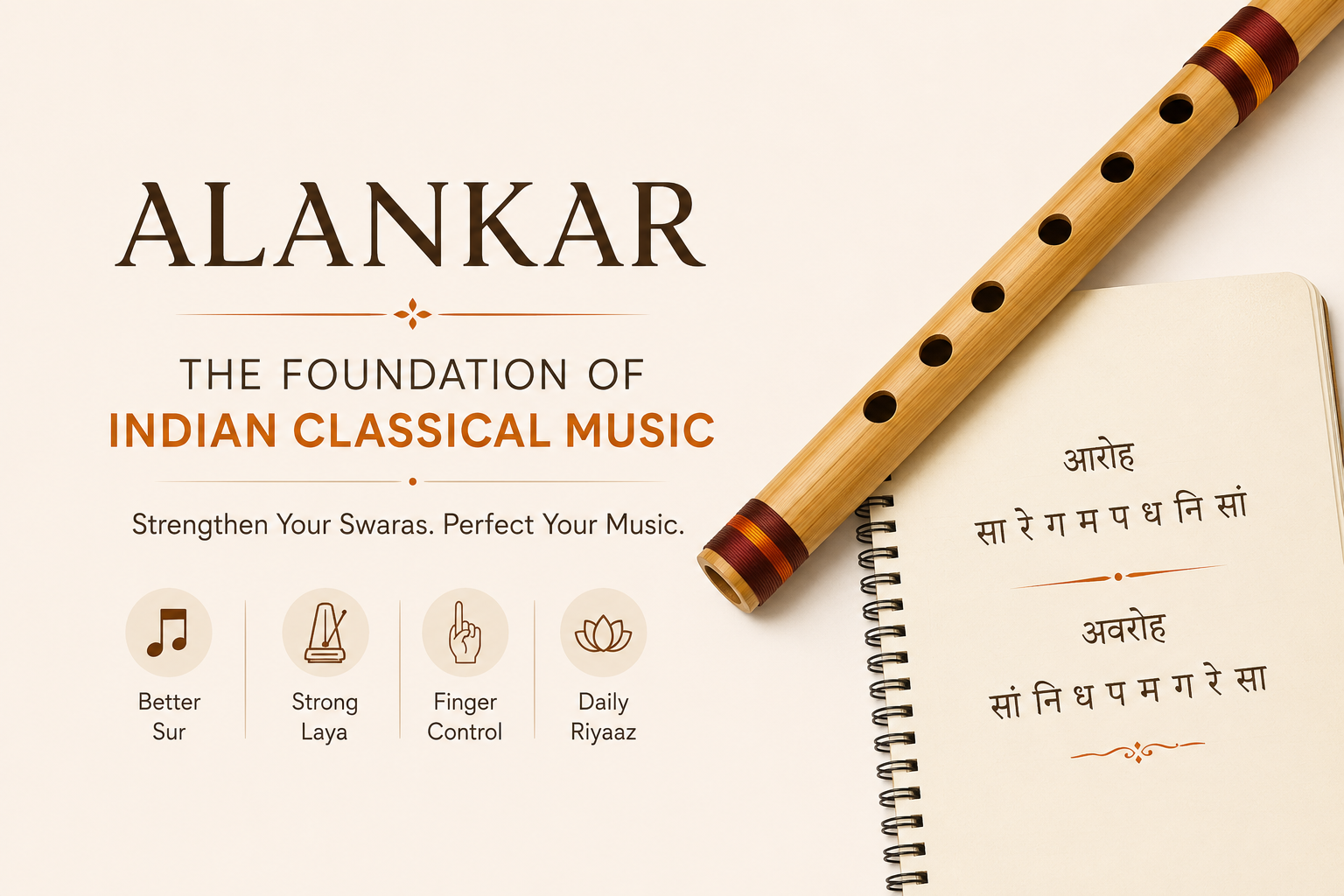
Every musical journey begins with the seven basic notes: सा रे ग म प ध नि सां Spend time listening to these notes carefully before trying to sing or play them. Your ears should become familiar with each swara before moving to more advanced exercises. Developing accurate pitch recognition is the first step in learning Indian classical music.
Step 2: Practice with a Tanpura
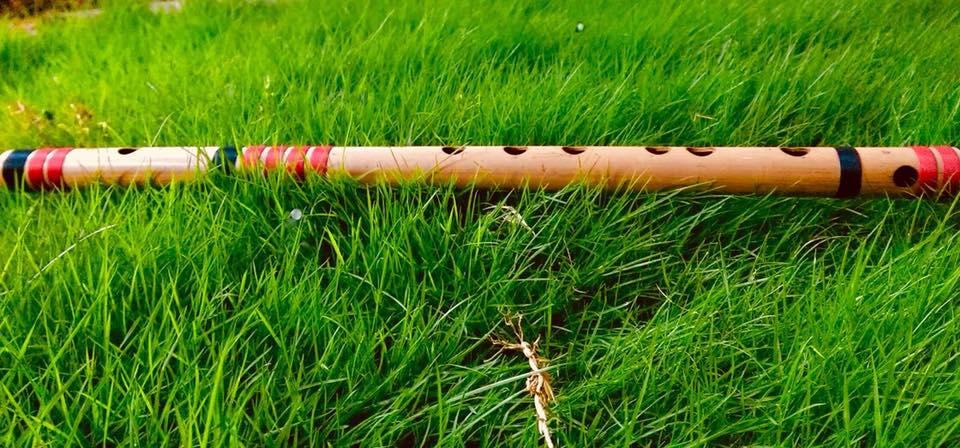
Whether you are learning the bansuri or vocals, practicing with a Tanpura is essential. For flute players, the Tanpura acts as a constant pitch reference, helping you produce cleaner notes and develop accurate finger placement. Start by playing each swara slowly—सा रे ग म प ध नि सां—while matching the Tanpura. This simple exercise greatly improves both your ear and your flute control.
Step 3: Begin with Simple Alankars
Once you are comfortable with the basic swaras, start practicing simple Alankars. For example: सा रे ग म प ध नि सां सां नि ध प म ग रे सा Then gradually move to patterns like: सा रे, रे ग, ग म, म प, प ध, ध नि, नि सां Practice slowly and focus on clarity rather than speed.
Step 4: Build a Daily Riyaz Habit
Consistency matters much more than practicing for long hours. A simple daily routine could look like this: 5 minutes – Breathing and relaxation 10 minutes – Basic Swaras 10 minutes – Alankar practice 10 minutes – Simple exercises or beginner compositions Practicing for 30 minutes every day is more effective than practicing for three hours once a week. Structured, regular Riyaz leads to steady progress.
Step 5: Listen to Great Musicians
Listen to both legendary Hindustani vocalists and renowned bansuri maestros. Try to identify how each swara is played, observe breathing patterns, and notice how phrases are connected. Listening carefully develops your musical ear and improves your flute playing without even touching the instrument.
Step 6: Don't worry if you're unable to produce clear notes
Don't worry if you're unable to produce clear notes on your flute during the first few weeks. Every bansuri player initially struggles with breath control, finger coordination, and maintaining a steady sound. These skills improve naturally through regular Riyaz. Focus on producing one clean note at a time instead of trying to play fast melodies.
Step 7: Learn One Step at a Time
A common mistake beginners make is trying to learn everything at once. Instead, follow this sequence:
- Swaras
- Alankars
- Breath control
- Rhythm (Laya)
- Simple Bandish or Bhajan
- Basic Ragas
Building a strong foundation makes advanced learning much easier.
Common Mistakes Beginners Should Avoid
- Practicing without a Tanpura.
- Trying to sing too fast.
- Skipping daily Riyaz.
- Ignoring pitch accuracy.
- Learning too many things at once.
- Expecting instant results.
Remember, classical music is a lifelong journey, not a race.
Learning Hindustani Classical Music Online
Today, learning from home is easier than ever. Online classes allow students to learn from experienced teachers, receive personalized feedback, and follow a structured curriculum without needing to travel. Many beginner-focused programs are designed specifically for students with no prior musical background.
Learning Hindustani Classical Music through the bansuri is a rewarding journey. You don't need prior musical experience—just a well-tuned flute, a Tanpura, and a willingness to practice every day. Begin with the basic swaras (सा रे ग म प ध नि सां), strengthen your foundation through Alankars, and gradually progress to ragas and songs. With consistent Riyaz and proper guidance, your tone, breath control, finger technique, and musical understanding will continue to grow. Remember, every accomplished flautist once struggled to play their first clear note. Your journey begins with a single breath.
Final Thoughts
Learning Hindustani Classical Music through the bansuri is a rewarding journey. You don't need prior musical experience—just a well-tuned flute, a Tanpura, and a willingness to practice every day. Begin with the basic swaras (सा रे ग म प ध नि सां), strengthen your foundation through Alankars, and gradually progress to ragas and songs. With consistent Riyaz and proper guidance, your tone, breath control, finger technique, and musical understanding will continue to grow. Remember, every accomplished flautist once struggled to play their first clear note. Your journey begins with a single breath.
Stay Tuned to the Reed
Join thousands of students and enthusiasts. Receive monthly Raga tutorials, flute care wisdom, and exclusive course updates directly in your inbox.
No Spam · Only Wisdom · Unsubscribe anytime